
Table of Contents
Introduction
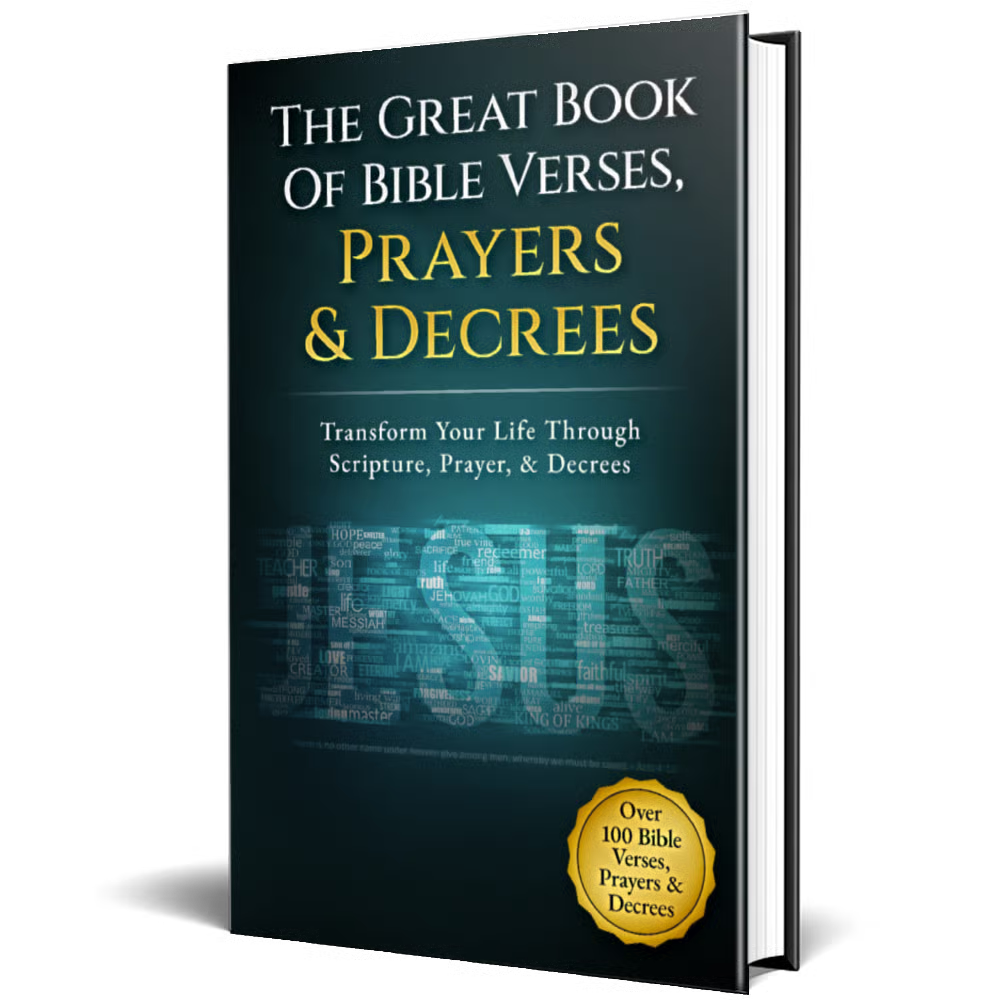
The Great Book of Bible Verses, Prayers & Decrees (the “book” below) presents itself as more than a devotional. It markets as a spiritual “toolkit” for believers who want to speak God’s promises aloud, pray with structure, and issue “decrees” to invite healing, restoration, peace, and breakthrough. The offering often includes additional materials — daily devotionals and audiobooks of Gospels — all packaged as a “healing & restoration” bundle.
This review examines what the book claims to offer, what it delivers, its strengths, and its theological or practical risks.
What The Great Book of Bible Verses, Prayers & Decrees Offers
- A 3-step format for each life-theme or issue: a Scripture verse (usually from the King James Version), a written prayer, and a spoken “decree.” This structure repeats across multiple themes like healing, peace, protection, provision, restoration, and so on.
- A ready-made system for people who may find it hard to compose their own prayers or struggle to find applicable scripture. The book gives them everything: verses, prayers, declarations.
- An all-in-one devotional bundle — with bonus content such as a 180-day devotional guide and audiobooks of the Gospels — designed to let you read, listen, pray, and declare, depending on your preference.
- A promise of transformation: physical healing, emotional restoration, peace, spiritual renewal. The marketing language often frames this as “activation” of God’s promises through your voice.
For many believers, the simplicity, structure, and immediacy of this package may feel like exactly what they need in difficult seasons.
Why Many Might Find It Appealing
- Accessibility for beginners: If you are new to Scripture or prayer, this book removes the guesswork. You don’t need to search verses, compose prayers, or wonder what to say. You simply read, pray, and declare.
- Consistency and routine: With set verses and prayers, you can build a habitual spiritual rhythm. That can help you stay anchored in faith even when life feels chaotic.
- Emotional and spiritual comfort: The tone — that God cares, hears, and desires healing — can bring reassurance. For those in pain, grief, fear, or uncertainty, the act of reading prayer and speaking truth aloud can offer peace, hope, and a sense of taking action.
- Flexibility: The digital format and audio bonuses allow you to engage with the material on your own time: at home, on commute, before sleep, or during quiet time.
For people who feel spiritually dry or disconnected from a regular devotional life, this structure can serve as a spiritual “jump-start.”
Theological and Practical Concerns
The book bases itself on a practice commonly known as “decree and declare” — the idea that believers can speak God’s promises aloud as authoritative declarations that will produce results. This theology has roots in the movement often referred to as Word of Faith.
Here are key concerns often raised about this approach:
- Lack of solid biblical basis for declarations: Critics note that Scripture does not offer a clear precedent for believers issuing their own “spiritual decrees” to dictate outcomes.
- Risk of treating prayer as magic or manipulation: When declarations start to feel like commanding God to act, prayer shifts from humble trust to an attempt at control. This may undermine the biblical theme of submission to God’s will.
- Fear of disappointment or blame on self: If declared prayers “don’t work,” the believer may feel their faith is weak or they didn’t speak right — rather than accepting God’s sovereignty or different timing.
- Emphasis on outcomes over relationship with God: The system can shift focus from knowing God, listening, growth, and spiritual maturity — to results: healing, blessings, deliverance. That may promote a transactional faith rather than relational trust.
Some critics go further, labeling “decree and declare” as a distorted expression of faith. They argue it aligns closer to motivational “positive-confession” or “self-help” models than biblical spirituality.
Who Might Benefit — and Who Should Be Cautious
Who might benefit:
- New believers who struggle to pray or search Scripture.
- Christians going through emotional, physical, or mental hardship, seeking hope and structure.
- People wanting consistency — a daily spiritual rhythm based on Scripture and prayer, but without needing to build everything from scratch.
Who should be cautious or reconsider:
- Those who value humble, relational prayer over “spiritual formulas.”
- Readers seeking deep Bible study, theology, context, and reflection. The book offers little in-depth teaching or doctrinal grounding.
- Individuals easily disappointed by unmet expectations. If declarations don’t produce visible results, faith may be shaken.
- Those uncomfortable with theology rooted in “prosperity/health-and-wealth” beliefs. The underlying worldview of speaking outcomes into being may diverge from traditional Christian doctrine.
Balanced Conclusion
The Great Book of Bible Verses, Prayers & Decrees presents a simple, accessible framework for faith and prayer. If you approach it as a devotional tool — one method among many — it can help build habits, nurture hope, and give direction when life feels hard.
If you view it as a “spiritual weapon” to demand healing or blessings, you risk leaning into a theology that many consider theologically problematic or psychologically risky.
Use it with discernment. Combine it with a full Bible, trusted Christian teaching, personal reflection, and community. Let the Word remain central and prayer stay humble.
